
Free red light therapy tools
Know your dose. Keep the habit.
Turn your mask, panel or wand's spec sheet into a real dose in J/cm2, build a four-week schedule for your goal, and track what changes. Device-neutral, evidence-graded, free in your browser.
Free toolsNo sign-upWorks with any device
Dose is irradiance times time. The ring fills a typical 10 minute mask session; your own numbers go in the calculator.
Dose in J/cm2 is irradiance in mW/cm2 times seconds, divided by 1,000. The calculator does the arithmetic for your device.
1/4Double your distance from a panel and the light reaching your skin drops to about a quarter. Distance is a dose setting.
3 to 5Sessions a week in most of the skin and hair trials, for 4 to 26 weeks. The schedule builder turns that into a calendar.
Free tools
Two free tools that answer the two questions everyone asks
How much, and how often. Both tools work with any device: you type the numbers from your own spec sheet, and they show the arithmetic and the trial each range comes from.
 Start here
Dose calculator
Enter your device's irradiance, your distance and your minutes. See the dose in J/cm2, how distance changes it, where it sits against the ranges reviews cite by goal, and the minutes that would hit a target.
Calculate my dose Four weeks
Schedule builder
Pick a goal, a device and the days you can actually do it. Get a printable four-week calendar with minutes per session, the frequency the trials used, and a short list of what to log.
Build my scheduleHow it works
Find the dose, fix the schedule, log what changes
Red light therapy has four variables: wavelength, irradiance, time and distance. Most people guess at three of them. This is the order that removes the guessing.
- 1
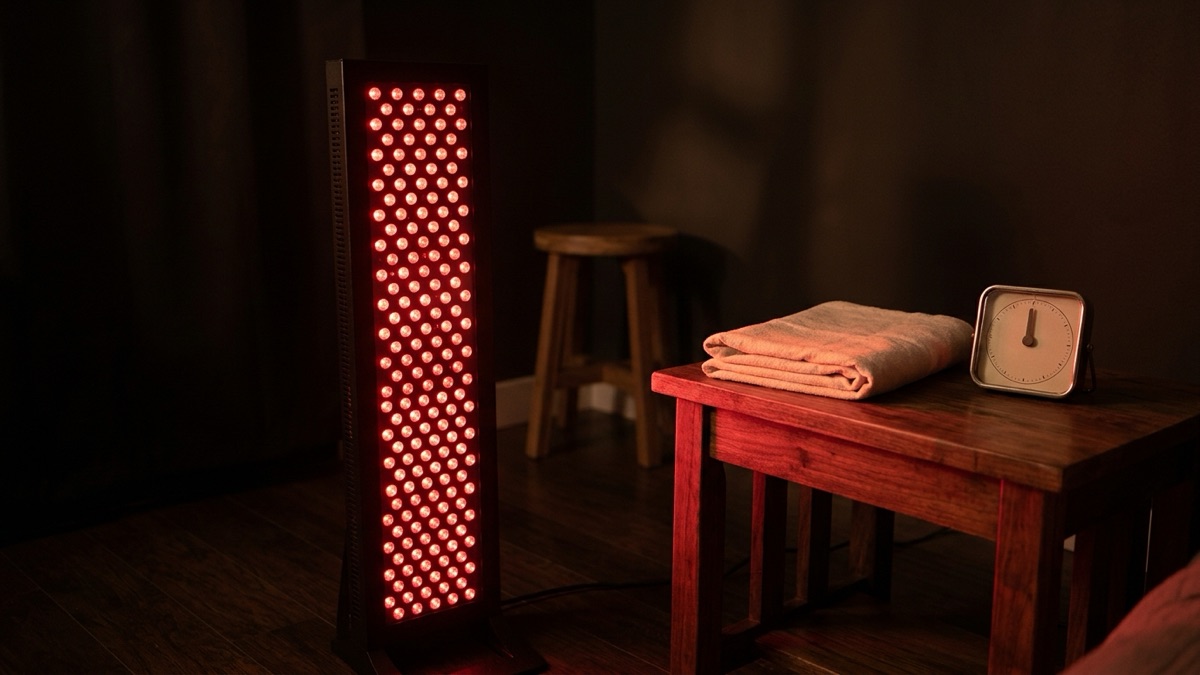
Find your device's irradiance
It is on the spec page as mW/cm2 at a stated distance. Masks sit on the skin; panels quote a number at 6 inches. The calculator turns it into J/cm2 per session.
- 2
Build a four-week schedule
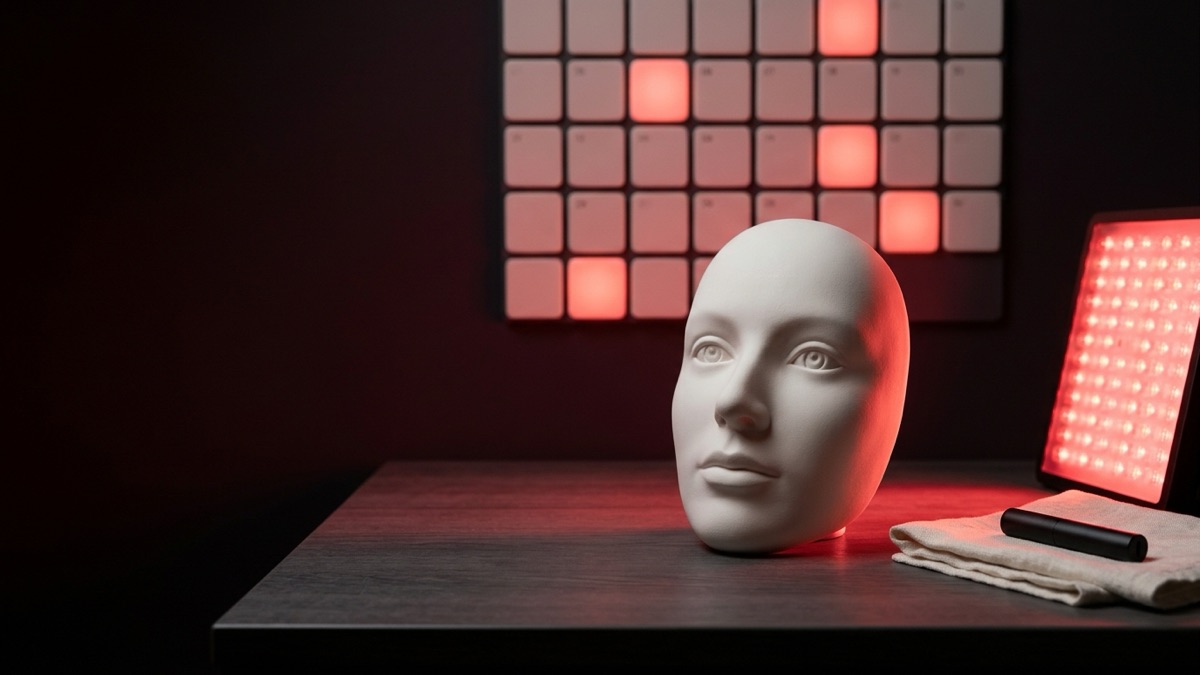
Pick the goal, then the days you can keep. Three to five sessions a week is what most trials used, and four weeks is the shortest honest test.
- 3
Log sessions and compare photos
Same light, same angle, every four weeks. Memory is a poor judge of skin and hair. The app will keep the log and the photo pairs for you, Android first.
The honest bit
What this site is, and what it is not
Red light therapy (photobiomodulation) has real trials and a lot of marketing. We try to stay on the trial side of that line.
- Device-neutralWe do not sell devices. Every spec we quote comes from a maker's public page with the date we read it.
- Evidence-gradedEach guide says how many people were in the trial, whether it had a sham control, which wavelengths and doses it used, and what it did not show.
- About consistencyThe variable most people lose is adherence. The tools and the app exist to make four weeks of sessions easy to keep and easy to judge.
- Not medical adviceWe do not diagnose or treat anything. Talk to a doctor before starting if you are pregnant, have epilepsy, an active cancer or take photosensitizing medication.
- Not a promise of resultsTrials report averages in groups. Your skin, hair or knee may respond less, or not at all.
- Not a stamp of proofFDA cleared means a device was found substantially equivalent to an earlier device. It is not the same as proven to work for your goal.
Eye safety first. Never stare into LEDs or laser diodes, wear the goggles that ship with a high-power panel, and never shine a device into an eye to treat an eye condition at home. A 2024 study found two red light myopia devices approached or exceeded retinal safety limits after about three minutes of continuous viewing.
From the guides
Evidence-graded guides, one question each
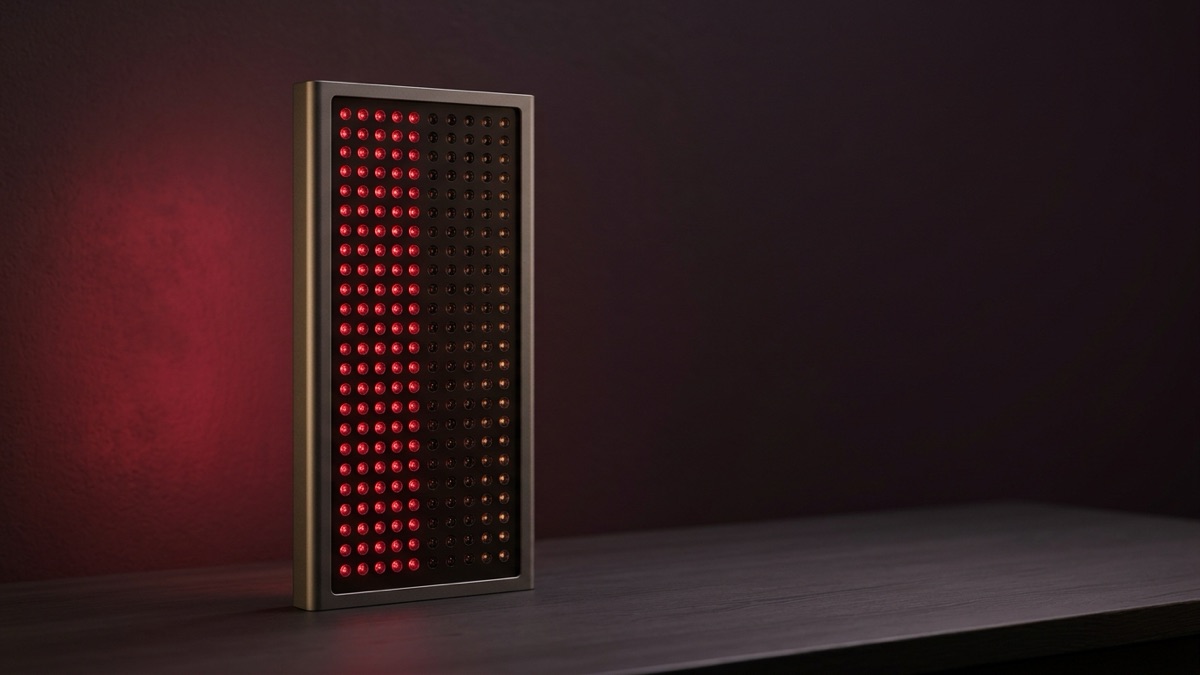
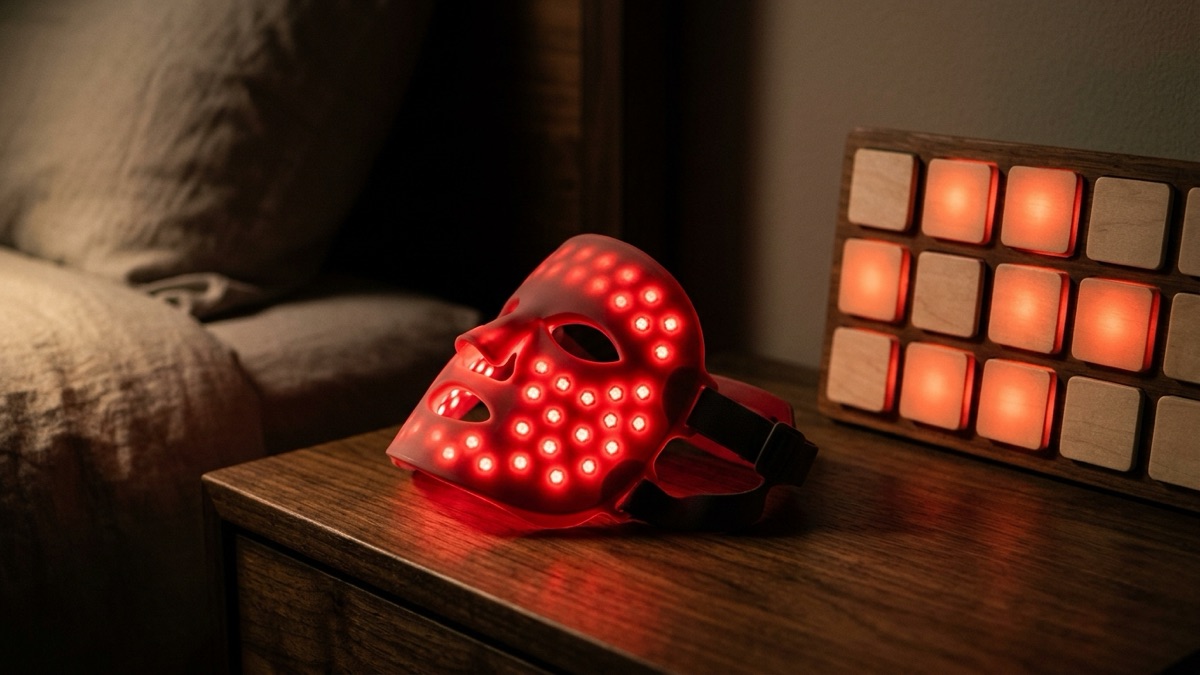
Questions
Good questions, straight answers
What does the dose calculator actually calculate?
Energy dose in joules per square centimeter: irradiance in mW/cm2 multiplied by seconds, divided by 1,000. It also corrects irradiance for your distance from a panel using the inverse-square law, compares the result with the ranges reviews cite by goal, and shows how many minutes would reach a target dose. Try the dose calculator.
How often should I do red light therapy?
Most skin trials used two to five sessions a week for four to fifteen weeks, and the hair trials used three sessions a week or every other day for 16 to 26 weeks. More is not better: the dose response is biphasic, so stacking sessions can blunt the effect. The schedule builder turns the frequency for your goal into a calendar.
Does red light therapy work?
For some goals, in some trials, at specific doses. Hair density in pattern hair loss and skin texture and collagen have randomized trials behind them; acne and acute wound healing earned a grade B in a 2018 systematic review of LED trials; many other claims rest on small or animal studies. Our guides grade each goal and say what the studies did not show.
Is red light therapy safe for my eyes?
Do not stare into any device. Masks that pass the IEC 62471 photobiological safety standard are sold for use without goggles, but high-power panels ship with eye protection for a reason, and near-infrared is invisible, so you cannot judge brightness by eye. Never use any device to treat an eye condition at home; a 2024 study found two red light myopia devices approached or exceeded retinal safety limits.
Who should not use red light therapy without asking a doctor?
People who are pregnant, have epilepsy, an active cancer or a photosensitive condition, or take medication that makes skin sensitive to light (device makers list these as contraindications). Anyone with a worsening or undiagnosed symptom should get it looked at before treating it with light.
Does the site or the app read my photos with AI?
No. The tools on this site ask for numbers, not photos, and everything runs in your browser. The app will store an optional before-and-after photo pair that only you compare. There is no AI analysis of your face, scalp or skin, by design.
Is RedLightLog affiliated with a device brand?
No. RedLightLog is an independent project by Viral Labs and is not affiliated with any device maker, clinic, retailer or other app. When a guide names a brand, it says so on the page and quotes only the maker's own published specs.